SOLAR SYSTEM
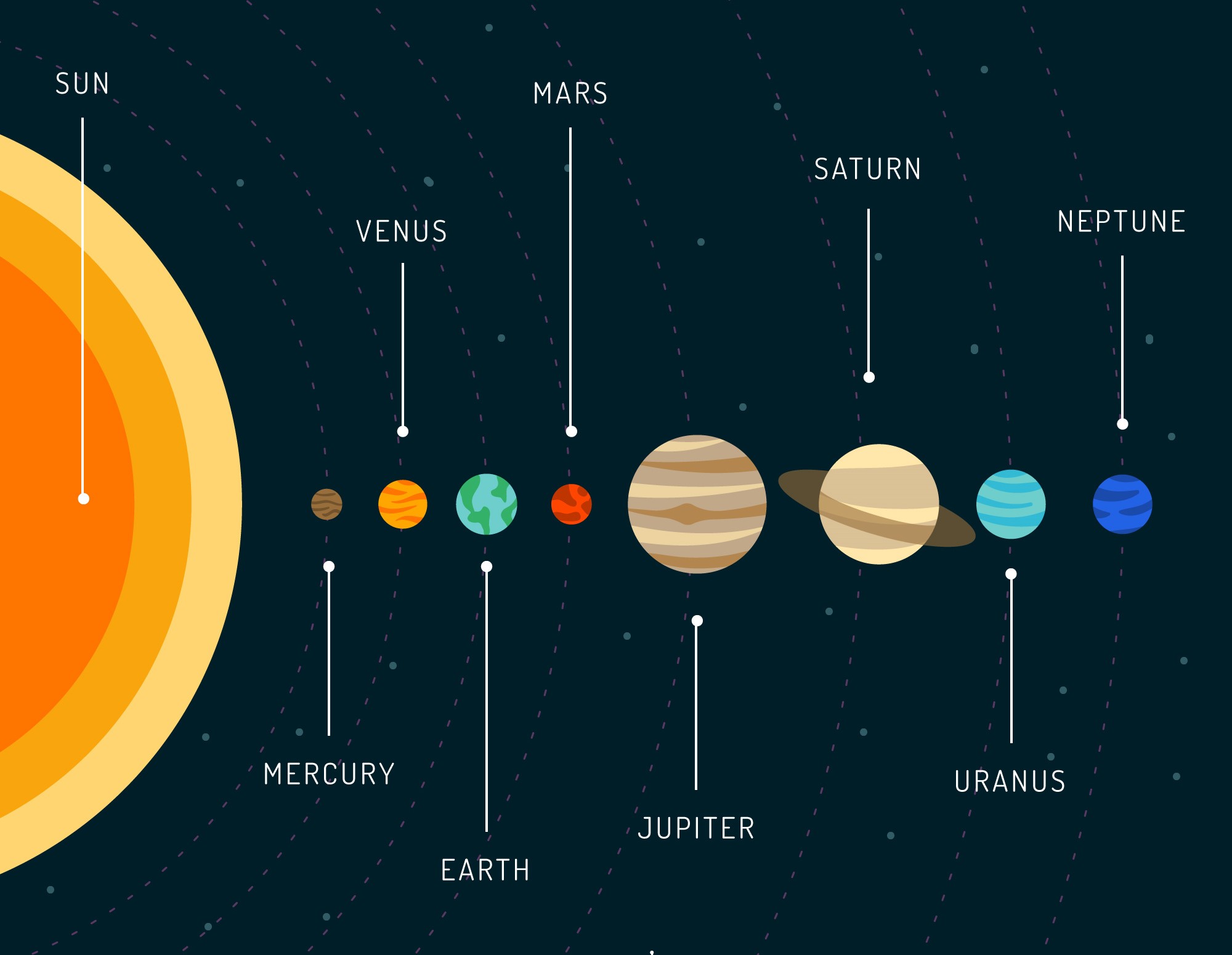
Our solar system is filled with planets, asteroids, comets, the sun and more, making it a wealth of discoveries waiting to be found. See the latest discoveries from across our solar system here.
Our solar system is filled with planets, asteroids, comets, the sun and more, making it a wealth of discoveries waiting to be found. See the latest discoveries from across our solar system here.
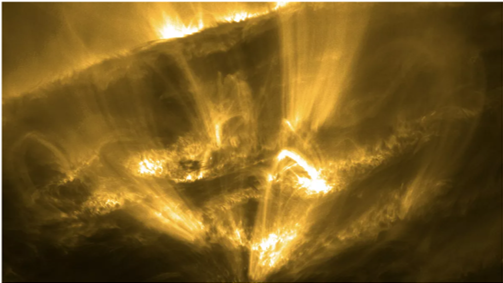
Astronomers have spotted never-before-seen meteor-like streaks seemingly rain on the surface of the sun, but you should think twice before attempting to catch these falling stars.
"If humans were alien beings capable of living on the sun's surface, we would constantly be rewarded with amazing views of shooting stars, but we would need to watch out for our heads!" Patrick Antolin, a solar physicist at Northumbria University in London and lead author of the discovery, said in a statement.
The three large outer worlds
Jupiter is the fifth planet from the Sun and the largest in the Solar System. It is a gas giant with a mass more than two and a half times that of all the other planets in the Solar System combined, and slightly less than one one-thousandth the mass of the Sun
Saturn is the sixth planet from the Sun and the second-largest in the Solar System, after Jupiter. It is a gas giant with an average radius of about nine-and-a-half times that of Earth. It has only one-eighth the average density of Earth, but is over 95 times more massive.
Uranus is the seventh planet from the Sun and is a gaseous cyan ice giant. Most of the planet is made of water, ammonia, and methane in a supercritical phase of matter, which in astronomy is called 'ice' or volatiles.
The three large outer worlds



This table shows data for major characteristics of the eight planets in the solar system. (One revolution is the length of time required for a planet to make one complete trip around the Sun; one rotation is the length of time required for a planet to make one complete turn on its axis.)
| Planet | Average distance from Sun (millions of km) |
Period of Rotation (earth time) |
||
|---|---|---|---|---|
| Mercury | 58 | 59 days | ||
| Venus | 108 | 243 days | ||
| Earth | 148 | 24 hours | ||
| Mars | 228 | 25 hours | ||
| Jupiter | 778 | 10 hours | ||
| Saturn | 1,427 | 10 hours | ||
| Uranus | 2,871 | 18 hours | ||
| Neptune | 4,497 | 19 hours | ||
| Table footer | ||||